









How to plant sweet-potato vines
Sweetpotato has the potential to produce remarkably high yields if given the right growing conditions. It can also yield more reliably under unfavorable conditions than many other crops, which is why it has potential for household food security. One should have sufficient planting materials when needed, usually at the onset of the rains.
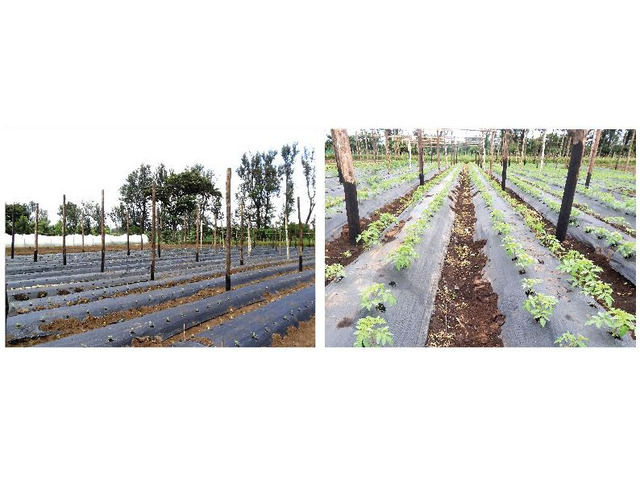
Sweetpotato can be grown on many types of soil but does best on deep, moderately fertile, sandy loam soils, which produce high-quality storage roots with an attractive shape and appearance. Sweetpotato is planted on mounds, ridges, or flat beds. Good soil aeration is needed for storage root initiation and growth, and hence, for higher yields, one needs to plant on higher soil mounds or ridges.

Planting sweet potatoes on Ridges. Photo credit: One Acre Fund
During land preparation, the mounds, beds, or ridges may be constructed by heaping soil up and over the residues of previous crops or vegetation from fallow periods, to provide fertility for the sweetpotato crop and to loosen any compressed soil that might hinder root formation.

Planting on Mounds, Ridges, Flat. Photo credit: ResearchGate
Sweetpotato, like other crops, benefits from good soil fertility. As a root crop, sweetpotato has a high requirement for potassium. However, high soil nitrogen content may lead to excess leaves-foliage growth and limited root production.
Farmyard manure, compost, or green manures can be very beneficial, if available, but may be more likely to be applied in a kitchen/backyard garden setting than in a large production field. Ash is rich in potassium and can be incorporated into soils to help boost sweetpotato root formation.
As with any crop, it is advisable to rotate sweetpotato with other crops, or to have a fallow period between crops, in order to reduce the build-up of diseases, such as viruses, and pests such as weevils and nematodes. It is also advisable, though not always possible, to try to separate new sweetpotato fields from recently harvested or existing fields, particularly in environments where weevils and viruses are a problem.
Mounds and ridges ensure good drainage and make it easier to harvest the mature roots, especially when harvesting is done in a piecemeal fashion as is often the case with sweetpotato. Whether mounds or ridges or beds are used, their sizes vary among locations, usually based on what is most practical for farmers in that area.
Where tractors or ox-ploughs are available, ridges are typically preferred, but ridges, mounds, and beds may all be prepared manually. Land preparation for planting is the single most labor-intensive part of sweetpotato production. In households where there are labor shortages, sweetpotato may be planted in flat beds, although this typically results in lower yields than when ridges or mounds are used.

Internode lengths may differ between varieties, in some varieties 3 nodes = 15 cm, in others 3 nodes = 30 cm length Sweetpotato vine cuttings or sprouts, at least 3 nodes (about 20-30 cm) long are usually planted at a spacing of 25-30 cm between plants and 60-100 cm between ridges, although farmers like to experiment with different spacings and will usually plant varieties with trailing vines wider apart than those with semi-erect or erect vines.
Where sweetpotato is grown on mounds, farmers usually plant 3 vines per mound with some space between the vines. At a spacing of 1 m x 1 m between mounds, 30,000 cuttings are required per hectare if 3 cuttings per mound are used. While on ridges 33,333 cuttings are required to plant a hectare at a spacing of 30 cm between plants and 1 m between ridges.
Adjustment of spacing can be used to control storage root size, with closer spacing producing a greater proportion of smaller sweetpotato roots, which are preferred by some markets. To plant, a stick, machete, or hoe is used to make a hole that most of the cutting (at least two nodes should be under the soil to enhance establishment and increase the number of roots that form) is placed into the soil, leaving only the tip exposed.
The soil is firmed into place to ensure good contact between nodes and the soil. Sometimes slower leaves are removed before planting, but this is not necessary. Farmers sometimes hold cuttings for a day or two in a cool, shady place to encourage root initiation prior to planting. In many places, farmers traditionally use two vine cuttings per planting hole, however, this requires a lot of extra planting materials, and agronomists recommend using just one cutting per hole and then gap filling any plants that fail to establish. On mounds, three cuttings are planted towards the top of the mound but equidistant from each other (to form a triangle shape - from top view).
On ridges, cuttings are planted either vertically or at a slant along the top of the ridge at the required spacing. Sweetpotato is usually often planted after the priority cereal crops and cash crops, or if when sufficient planting materials have been generated by the rains. However, some farmers can also take to plant sweetpotato as the priority cash crop.

Be gentle not to damage sweetpotato while harvesting, a dent might lead to spoilage. Photo credit: Shutterstock/Alexander Knyazhinsk INFORMATION | CREDIT: International Potato Center (CIP)
📚 Related Articles
📖 More Articles


Market Prices across Kenya. Buy and Sell Markets
Market Prices across Kenya. Compare maize, beans, tomatoes, onions & more by county and market
Read More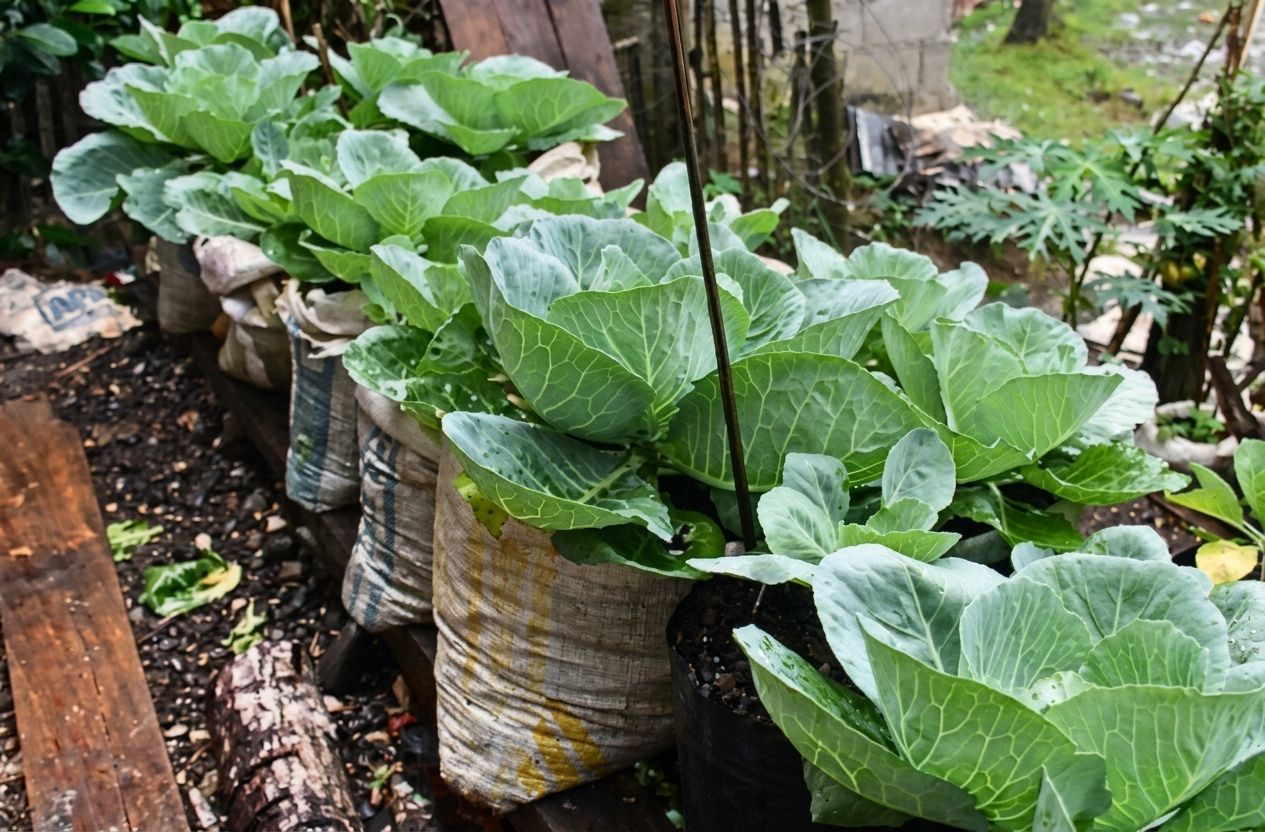
Planting Vegetables in Sack Bags
Small-Space Farming: How to Grow Vegetables in Sacks
Don't have a big garden? You can still grow your own food. …
Read More
How to plant sweet-potato vines
Sweetpotato has the potential to produce remarkably high yields if given the right growing conditions. It can also yield more reliably under unfavorable …
Read More
A Farmers Online Market in Kenya
Mkulima Online is Kenya's Inclusive Agricultural Marketplace
Mkulima Online is an innovative online platform tailored for farmers and buyers to connect, trade, and …
Read More
How do you sell agricultural products on online platforms
Selling Agricultural Products Online is an Opportunity to Kenyan Farmers
Agriculture is the backbone of Kenya's …
Read More