







Planting Vegetables in Sack Bags
Small-Space Farming: How to Grow Vegetables in Sacks
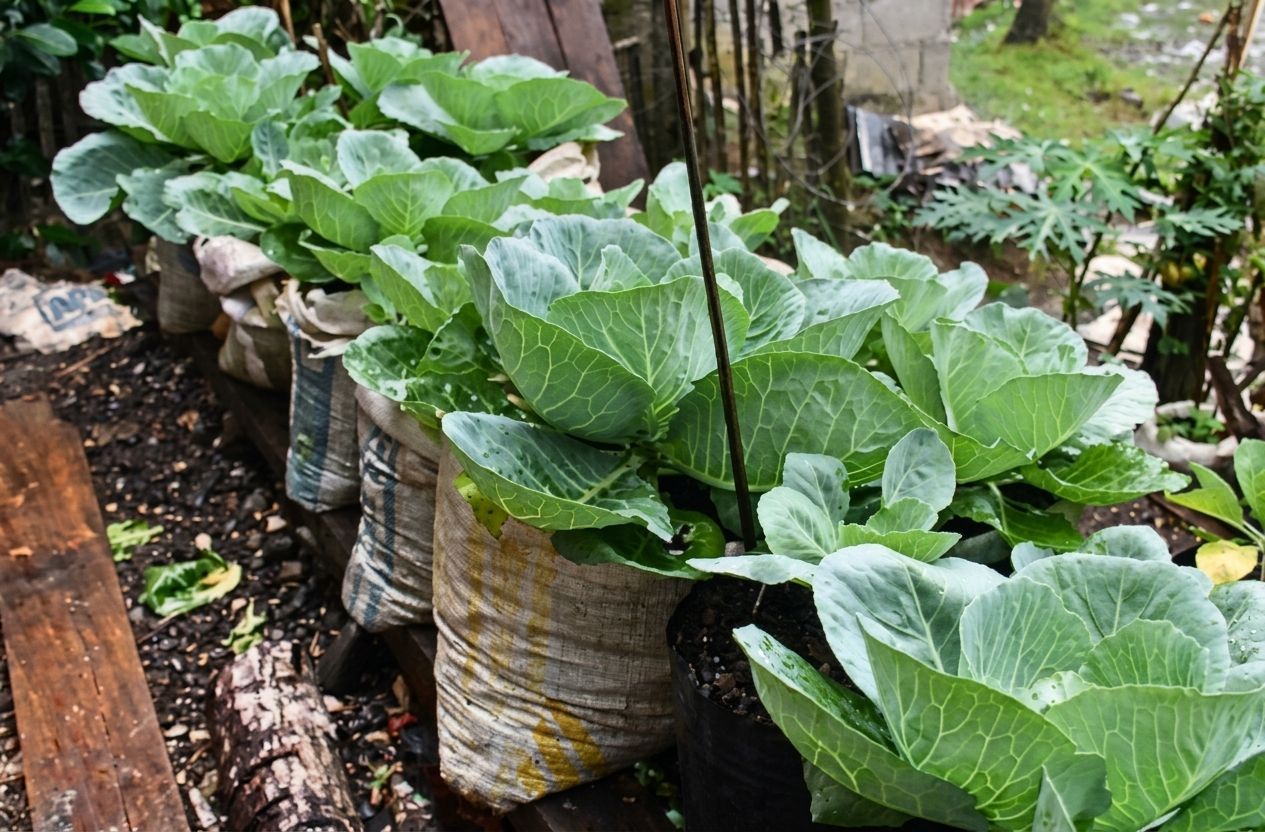
Don't have a big garden? You can still grow your own food. Small-space farming is a practical way to grow vegetables, herbs and even some fruits in urban areas and home compounds where land is limited. All you need are sacks, bags, containers or a small patch of ground.
Growing food at home gives your household fresh, healthy produce and cuts down on what you spend at the market. A few onions, some spinach or a handful of tomatoes from your own sack garden can add up to real savings over time.
Why Choose Sack Gardening?
- Saves space: sacks can be placed on a balcony, veranda, rooftop or beside the house.
- Saves money: sacks are cheap, and you spend less on vegetables.
- Easy to manage: weeding and watering are simpler than in a large plot.
- Movable: you can shift sacks to follow the sun or shelter them from heavy rain.
What You Need to Get Started
- A strong sack or bag (a used grain or rice sack works well)
- Good-quality soil mixed with compost or well-rotted manure
- Small stones or gravel for drainage
- Seeds or seedlings of your chosen vegetables
- A watering can or container
Step-by-Step Guide to Sack Gardening
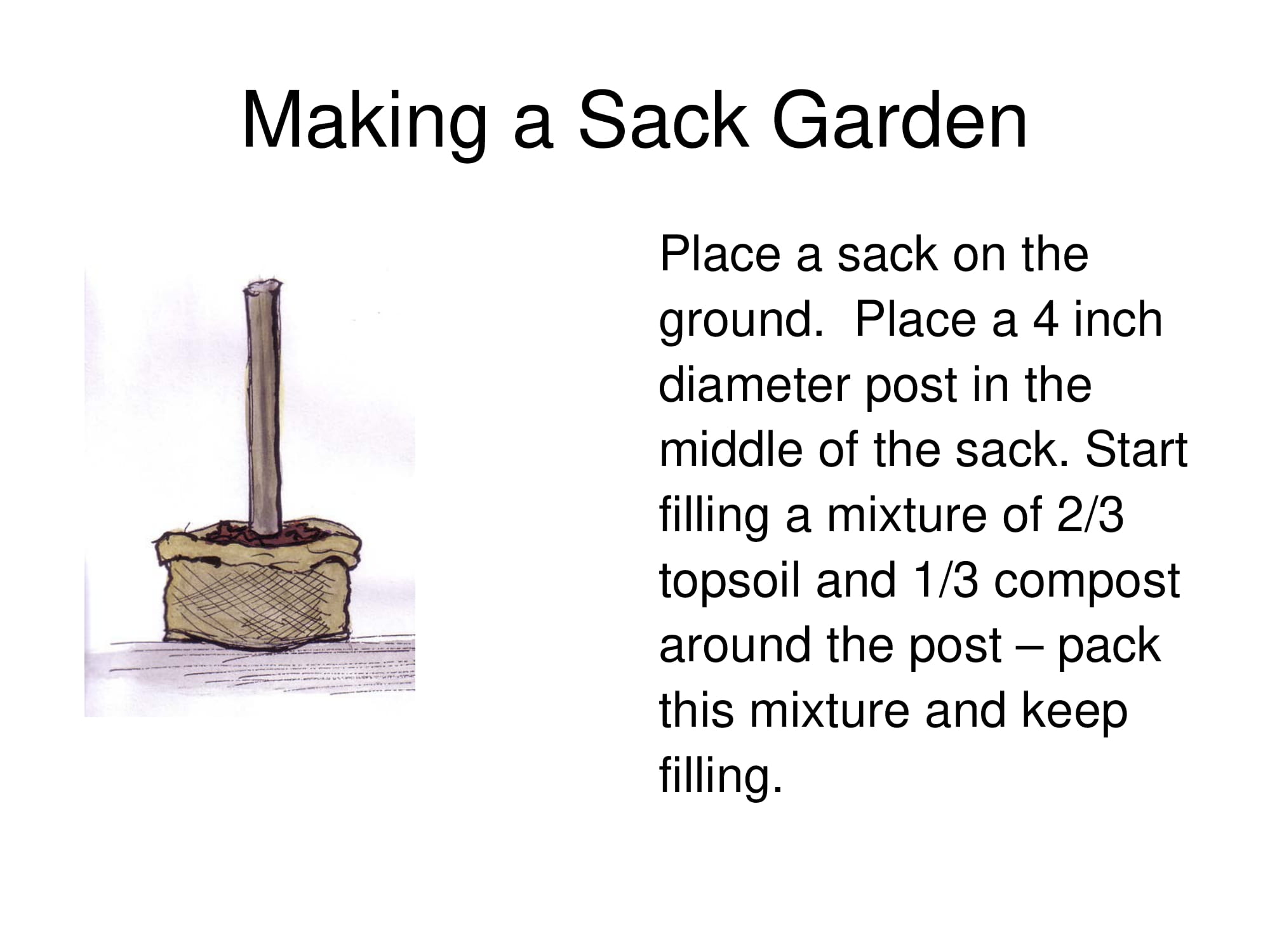
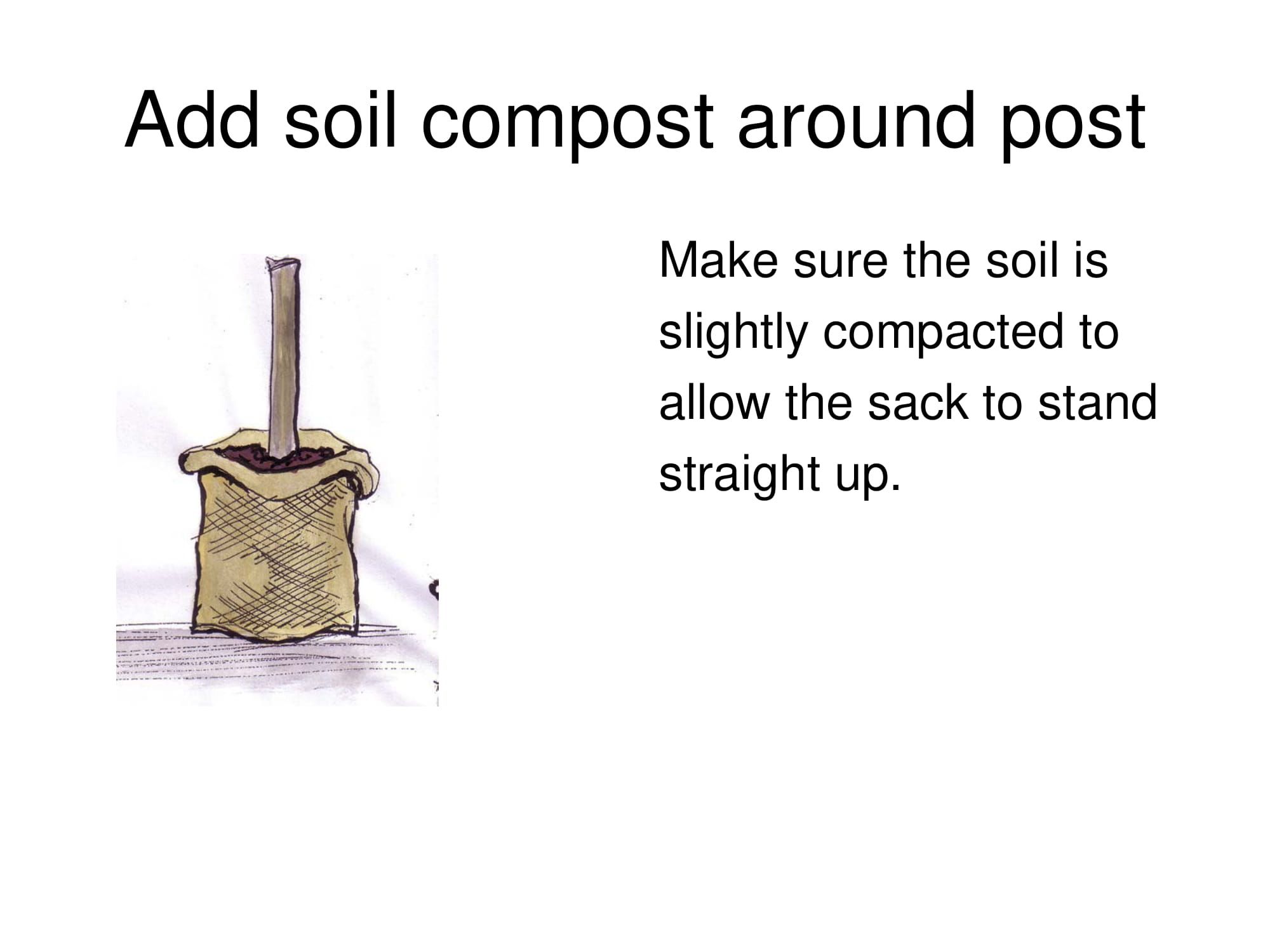
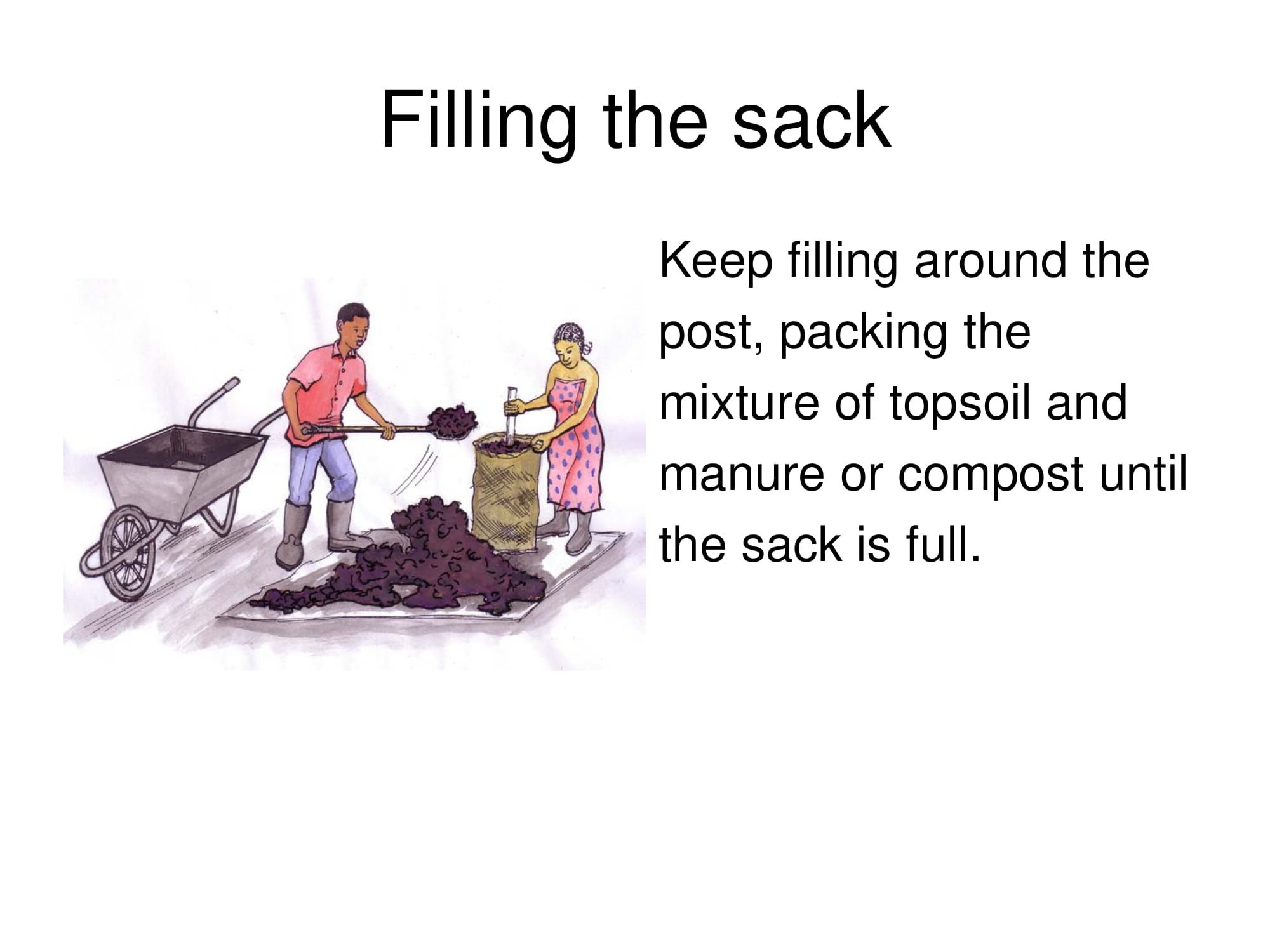
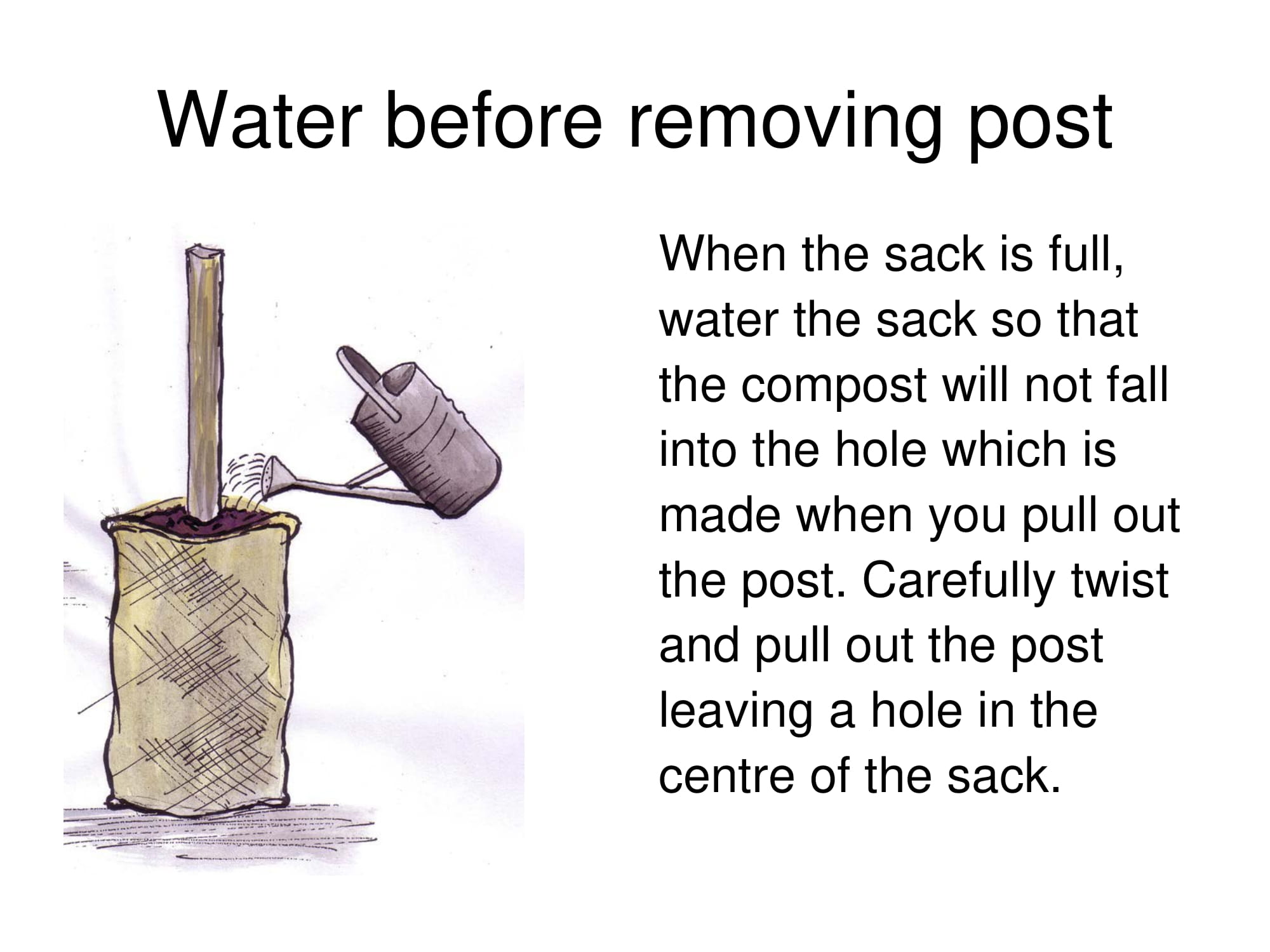
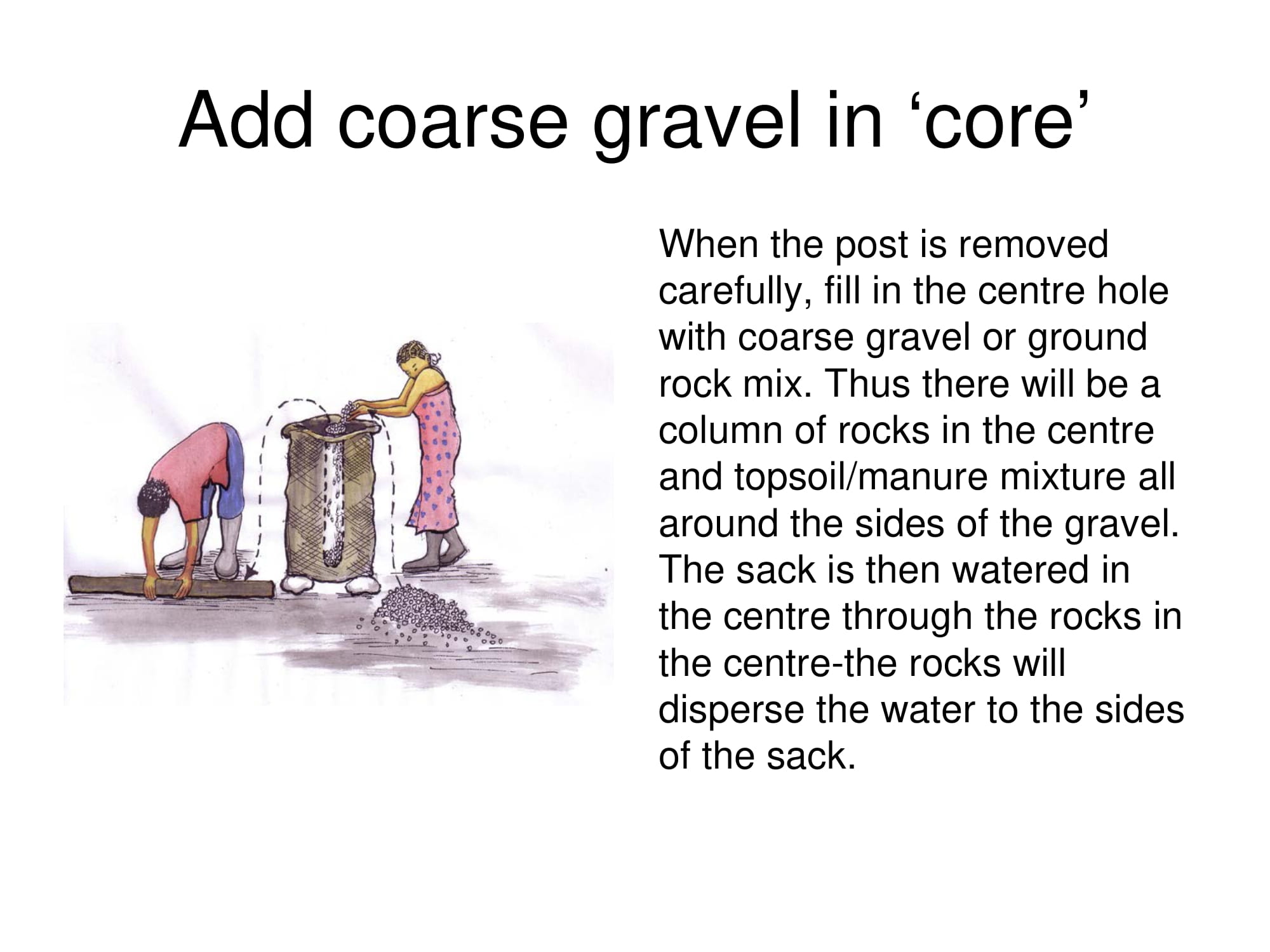
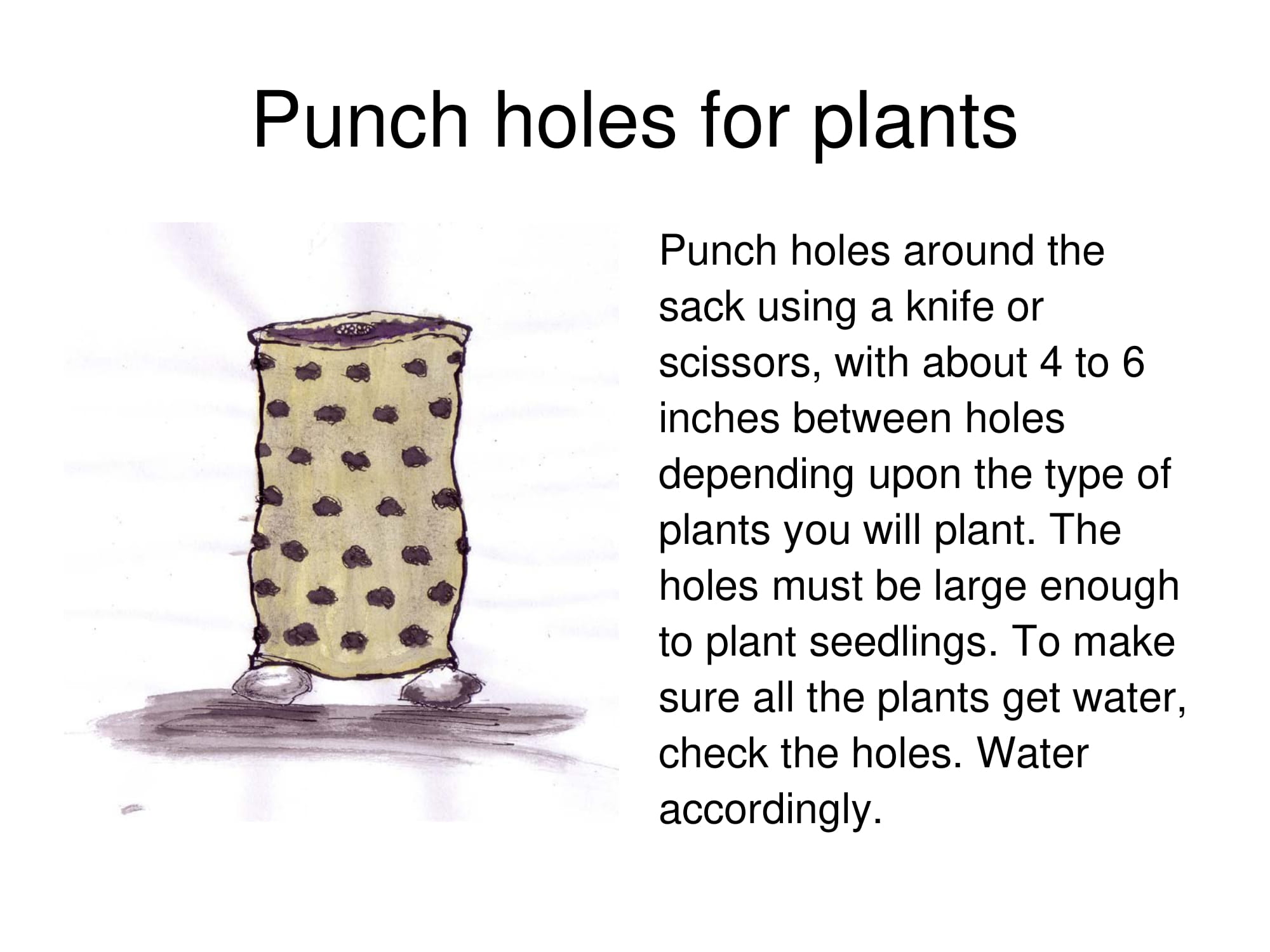
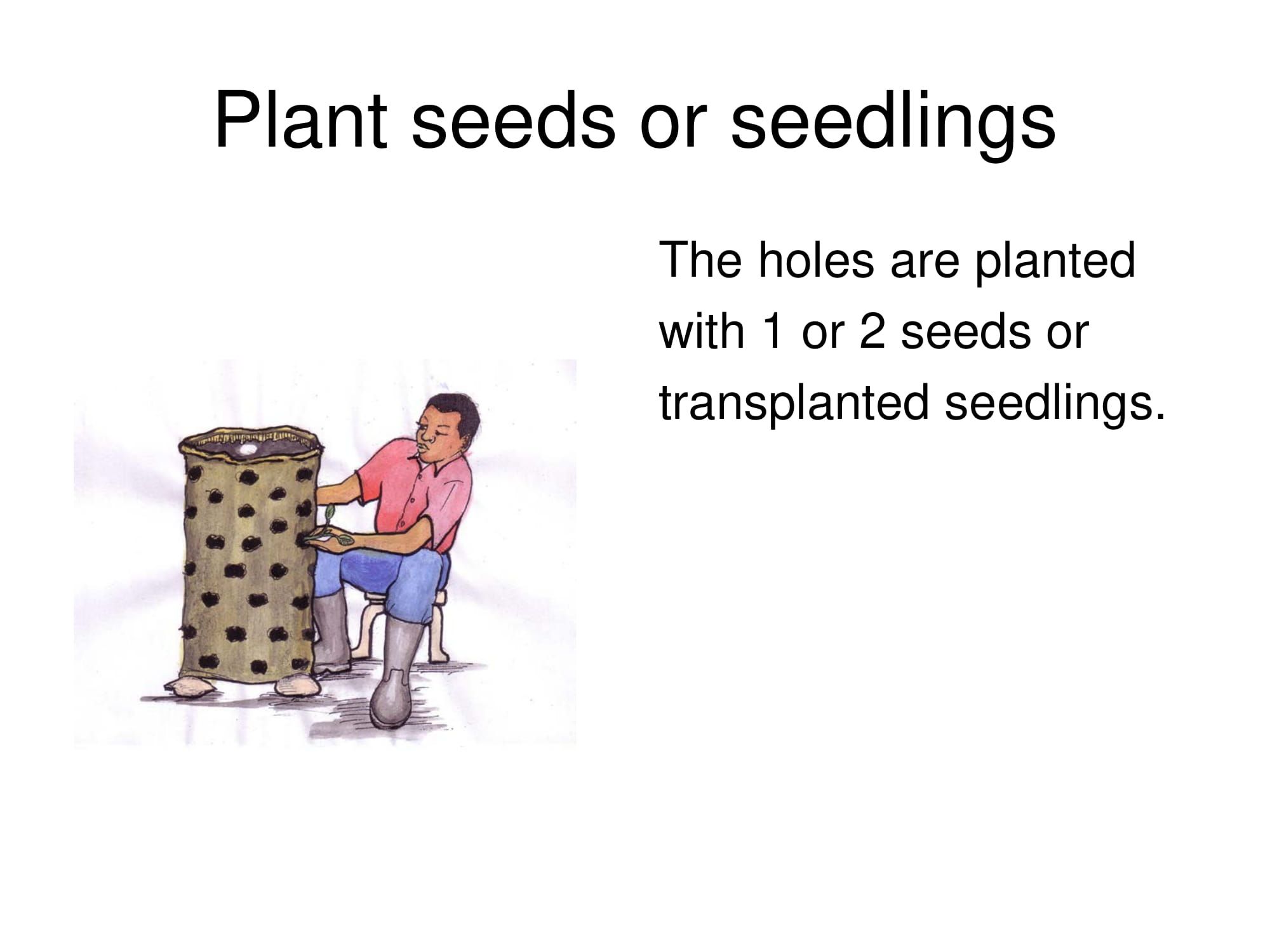
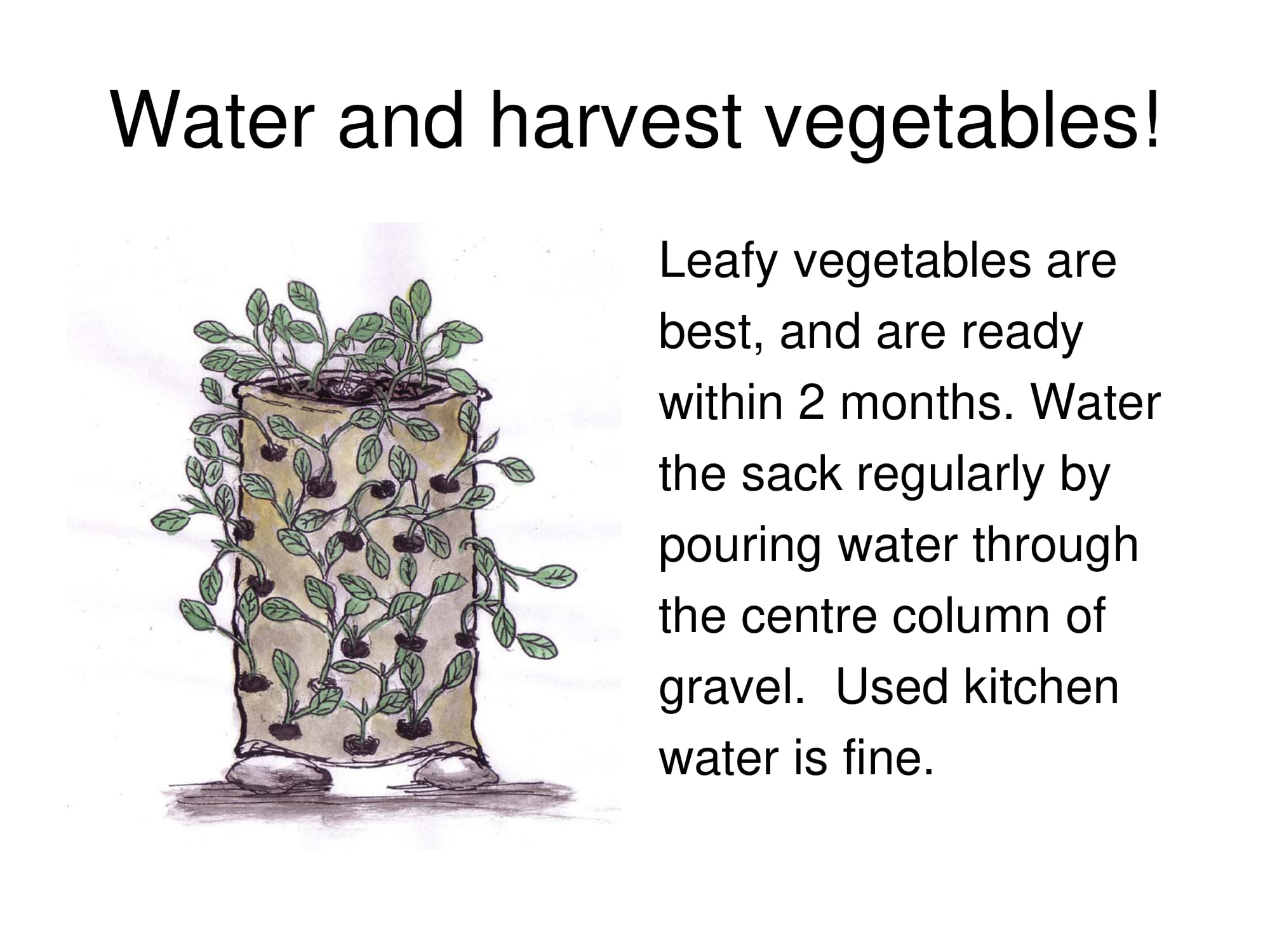
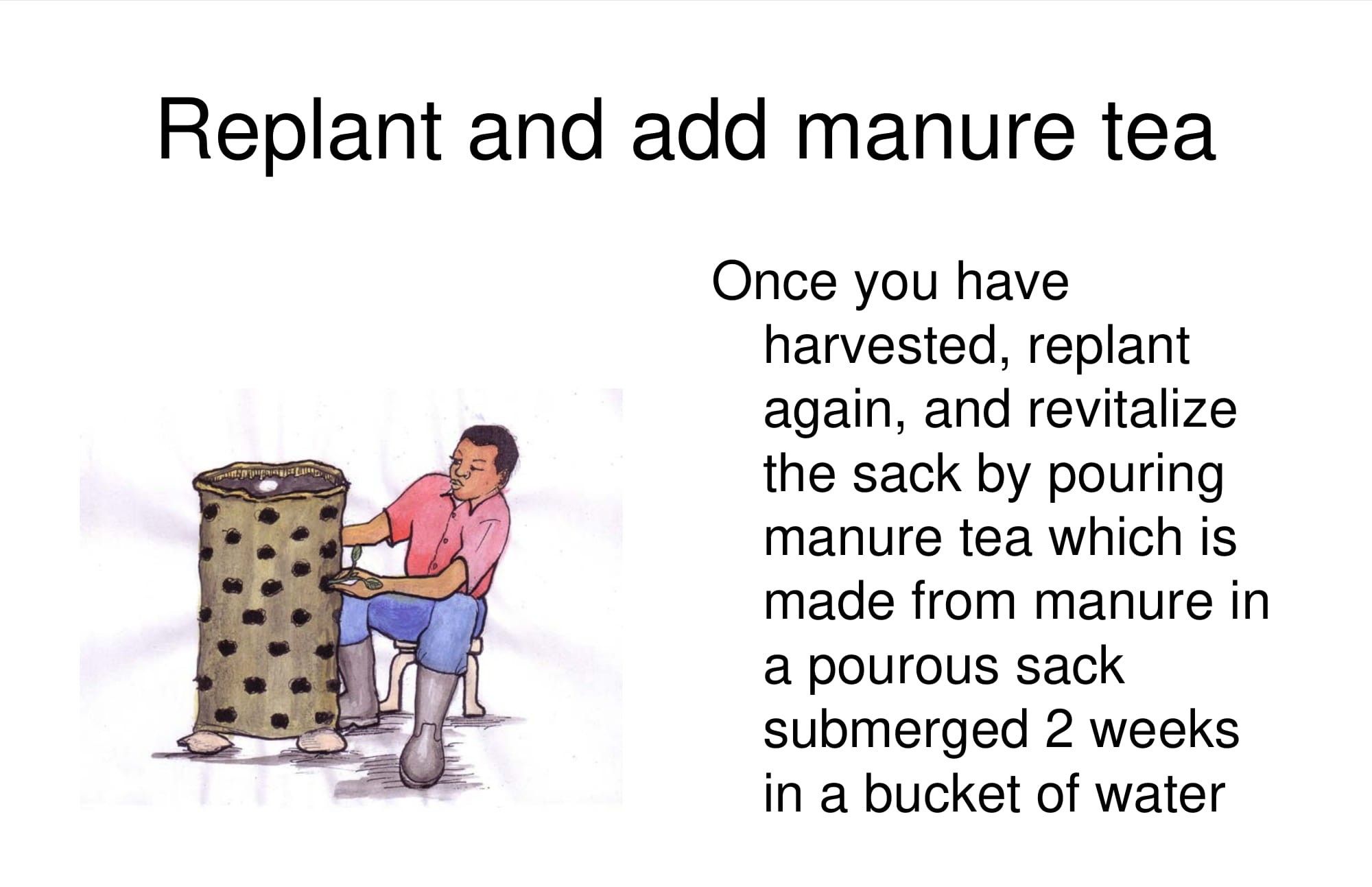
The illustrations below show how to make a sack garden and plant vegetables in it, from preparing the sack to planting.
Vegetables That Grow Well in Sack
Choose crops that do not need much root space. Good options include:
- Onions and spring onions
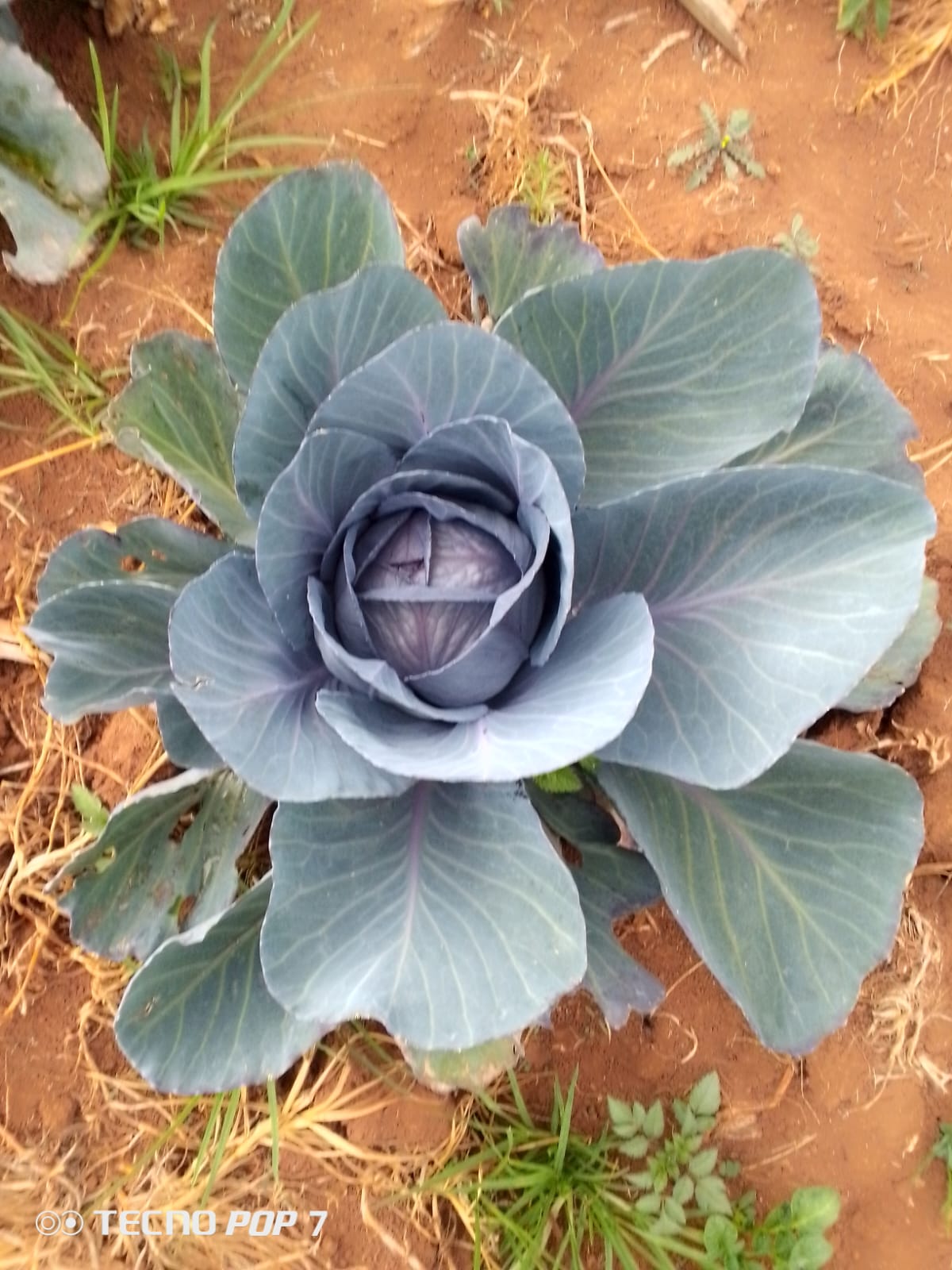
- Spinach, kale (sukuma wiki) and other leafy greens
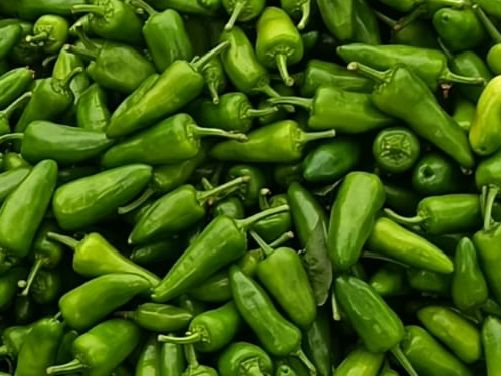
- Tomatoes and peppers
- Herbs such as coriander, parsley and mint
Simple Tips for a Healthy Sack Garden
- Sunlight: place sacks where they get at least 6 hours of sun daily.
- Watering: keep the soil moist but not waterlogged, and water more often in hot weather.
- Feeding: add compost or manure regularly to keep the soil fertile.
- Pest control: check your plants often and remove pests early.
Weed Control
Weeds growing on the sides of a vertical sack garden should be pulled out by hand. On the top of the sack, loosen the soil gently with a stick. This also helps water soak in properly instead of running off.
Pest and Disease Control
- Inspect regularly: walk around your sacks often and check the plants for any sign of pests or disease.
- Natural spray for pests: if aphids, mites or thrips attack, make a homemade spray from Mexican marigold, tithonia, hot pepper and garlic. Let the mixture ferment for up to 4 days, then spray it on the leaves, paying special attention to the underside where these pests hide. A mixture of milk and water also works as an alternative.
- Best time to spray: spray early in the morning or in the evening when it is cool, because pests are less active at those times.
- Spray regularly: repeat the spraying every two weeks to keep pests from returning in large numbers.
- Deal with sick plants quickly: uproot infected plants or cut off the affected leaves so the disease does not spread to healthy crops.
Top Dressing
Top dressing gives your crops extra nutrients during the growing period. You can use any of the following:
- Cow dung solution: mix fresh cow dung solution with water at a ratio of 1:5 (1 litre of solution to 5 litres of water).
- Tithonia juice: chop tithonia leaves into small pieces and soak them in water. Within a day, the liquid is ready to use as a foliar feed sprayed on the leaves.
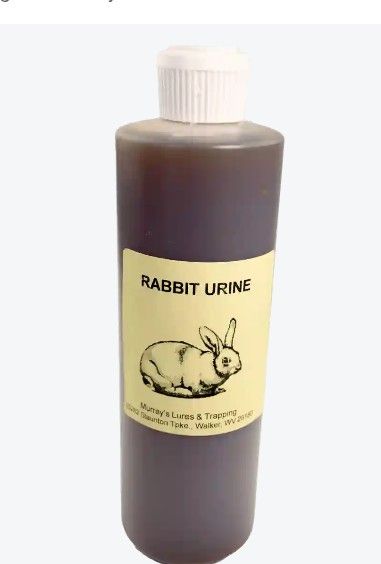
- Rabbit urine or vermicompost juice: dilute at a ratio of 1:4 (1 litre of urine or juice to 4 litres of water) and spray on the crops. It also helps keep pests away.
Harvesting
- Pinching: for nightshade (managu) and amaranth, pinch off the growing tips 2 to 3 weeks after transplanting. This encourages the plants to produce more side shoots and gives you a bigger harvest.
- When to harvest: with good care, transplanted vegetables are usually ready to harvest in 3 to 4 weeks.
- Harvest gently: pick the leaves or shoots you need without pulling out the whole plant, so it keeps growing and gives you more harvests.
Make the Most of Your Available Space
You do not need a large farm to grow your own vegetables. Whether you live in the city or have only a small space around your home, sack gardening lets you put every corner to productive use.
Start small, choose suitable vegetables and enjoy the benefits of fresh produce grown at home. Have you tried sack gardening? Share your experience in the comments below.
Picture credits: GSC
📚 Related Articles
📖 More Articles


Market Prices across Kenya. Buy and Sell Markets
Market Prices across Kenya. Compare maize, beans, tomatoes, onions & more by county and market
Read More
Planting Vegetables in Sack Bags
Small-Space Farming: How to Grow Vegetables in Sacks
Don't have a big garden? You can still grow your own food. …
Read More
How to Plant Sweet Potatoes: A Quick Step-by-Step Guide
Sweet potatoes are one of the most rewarding crops you can grow. Under the right conditions they give very high yields, and they …
Read More
A Farmers Online Market in Kenya
Mkulima Online is Kenya's Inclusive Agricultural Marketplace
Mkulima Online is an innovative online platform tailored for farmers and buyers to connect, trade, and …
Read More
How do you sell agricultural products on online platforms
Selling Agricultural Products Online is an Opportunity to Kenyan Farmers
Agriculture is the backbone of Kenya's …
Read More